The Jagged Present: Precipice’s Lessons from the Past (The Warhammer Fangame Days)
First, the business: if you haven’t seen this news, I’ve launched a game studio to publish several projects near and dear to my heart. One of these is Precipice: Mech Miniatures Combat, a minis game that draws from my experience playing and designing minis games, RPGs, and board games and applies them to a fictional genre I hold dear. Precipice is miniatures-agnostic (more on why later in this post), meaning you’ll be able to use our dedicated miniatures or bring your own mechs to the fray. Follow the Kickstarter for updates and check out the game’s Open Alpha Test today!
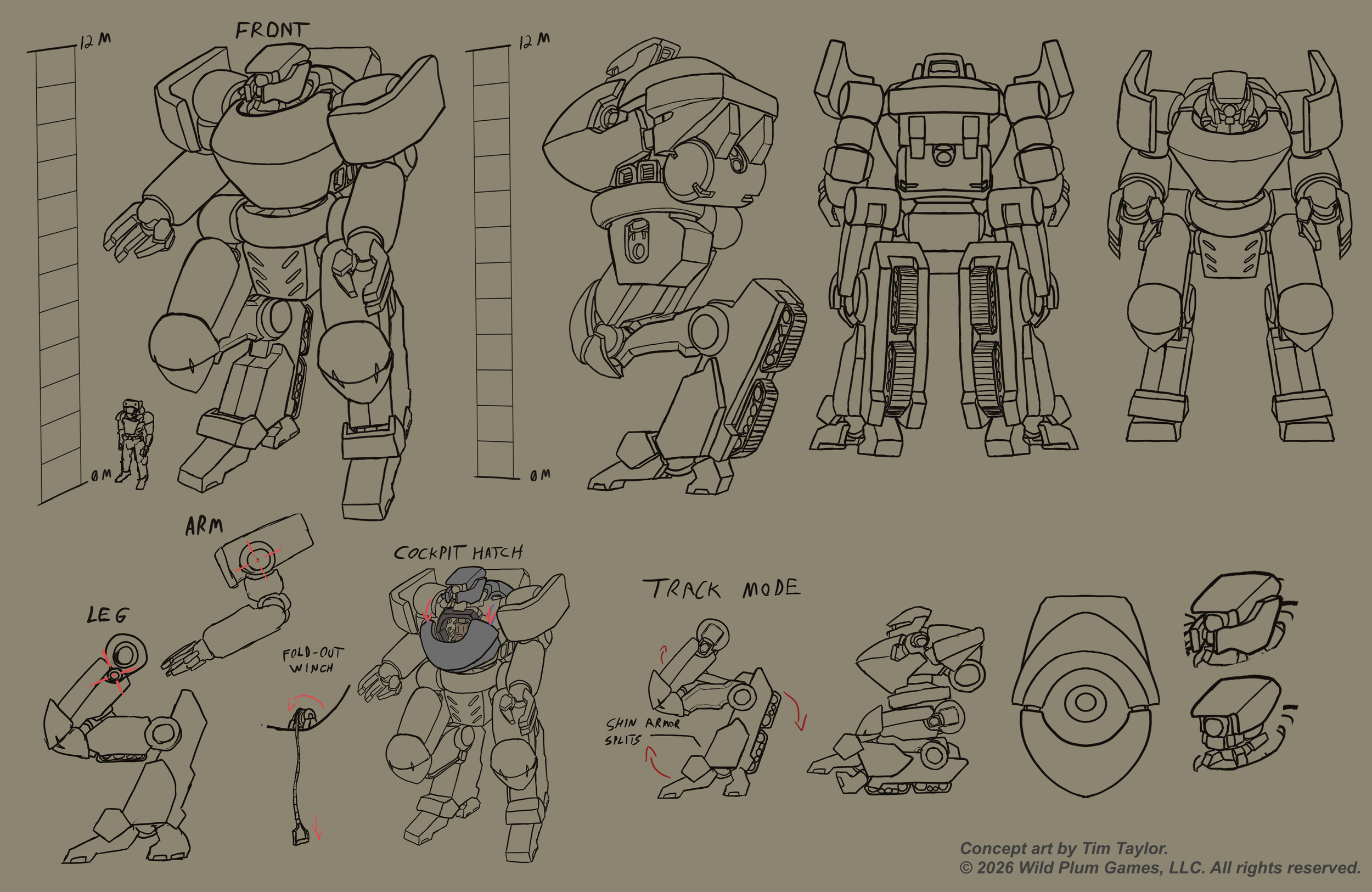
My love of transforming robots definitely does not give any tells about the first mecha series I loved (it was Transformers).
Precipice is a project that I’ve been mulling over concretely for the better part of five years, but more abstractly, I’ve been thinking on it for the better part of over fifteen years. In fact, I can place the earliest signs of Precipice fairly concretely: in college, I had the brilliant idea idea to play the game I was already invested (Warhammer 40,000 5th Edition) using Gunpla and other model kits for Apocalypse titan units. Sadly, I can’t find any surviving photographs of the absolutely massive games we’d sprawl across our dorm lounge (the fraternity with whom we shared the lounge was shockingly good-natured about the whole thing, given we were monopolizing a community space), so they live only in memory. Space Wolves and Chaos Space Marines rampaged over piles of books and homemade terrain as 1/144th scale mobile suits blasted them with dreaded D-damage weapons.
I remember two things from this game: 1). It was a lot of fun to set up and think about, and I treasure the time I spent with my friends and 2). as soon as we started playing, Apocalypse’s titan rules didn’t feel like the mecha I wanted to emulate. The mechs were big scary units, to be sure, but controlling them didn’t evoke the shows and manga I was into in that era: 08th MS Team, War in the Pocket, or Broken Blade. Even the nimble Eldar titans were best used as fast artillery platforms that avoided close engagement rather than the multi-role mecha of the media I enjoyed. The spotlight of the battle focused on the slow clash of armies rather than the tense, moment-to-moment drama in the cockpit of each mech. Mechs didn’t become damaged in interesting ways, smash through buildings, or tear off their own disabled limbs to bludgeon the enemy. Outfoxing your opponent was more a matter of large strategic actions than anything resembling the feints, clever tricks, and displays of skill that I loved to watch in mecha series. And to be clear, the game was doing exactly what it was supposed to do: showcase huge forces in strategic engagements. But I found myself wanting something different.
I ruminated on how I could homebrew the game I wanted from Apocalypse. I considered 4e D&D’s rules as a basis, but discarded the concept because it was too much work to make the scale function. I drafted fan codices for shows I was watching at the time (which, regrettably, vanished with my laptop’s memory). I explored dedicated mecha minis games, but none were at the scale I wanted (one where I could use the plastic kits I already owned), and most were just too crunchy to get my friends to play.
Then I graduated college and shelved my mecha game aspirations for a time. I threw myself fully into roleplaying games, personally and professionally, as I started working at Fantasy Flight Games. Minis games remained a side hobby - I played for fun, and I helped with playtesting of games like X-Wing and Dust Warfare. I built my Tomb Kings out for Warhammer Fantasy just in time for the Old World to experience the End Times and then explode; fortunately, Games Workshop’s return to the Old World franchise has meant they’ve crawled forth from their dusty crypts again! During that time, I got to write the rules for Tau Battlesuits in Rogue Trader, which was a fun throwback to the hours I spent retrofitting the Tau Empire Codex into rules for Code Geass’ knightmare frames years prior.
Then miniatures rocketed to prominence in my career, as I’ve discussed before. But reflecting on the particular lessons of X-Wing taught me for Precipice is a story for another blog post.
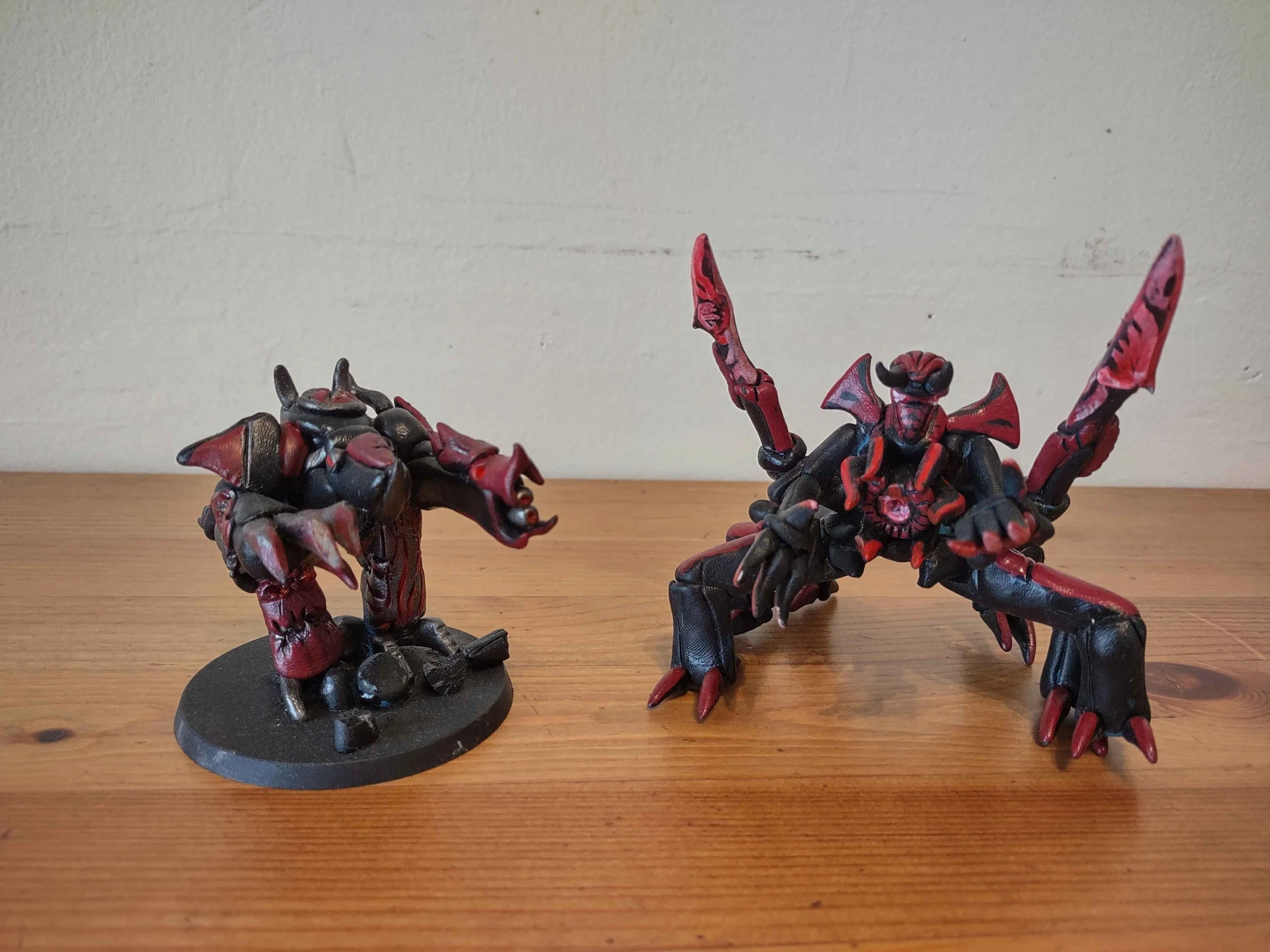
Some rare, surviving 2009-vintage Dubious Max Originals. Look at those fingerprints in the Sculpey!
My years of (crudely) making my own Warhammer armies out of Sculpey oven-fire clay, green army men, and model kits left me with some important impressions. First, I love to find creative ways to make the hobby my own, and I love the feeling I get when I can cleverly repurpose something I already have for use in a game without spending a lot of money.
Second, no game I could find was delivering the experience I sought. I identified three key elements I wanted:
I wanted to feel like I was controlling the mechs from the cockpit, not from a table in a command tent (holographic or otherwise).
I wanted the skill and status of the pilots to matter mechanically as characters.
I wanted mechs to become damaged in ways that felt impactful on play, forcing players to adapt their strategies as a game unfolds.
I would continue to the search over the years, finding lots of great games but never quite the one I wanted. Eventually, I came to the conclusion that I would have to make it myself.